Tree Cutting & Trimming Service
The Art and Science of Professional Tree Trimming
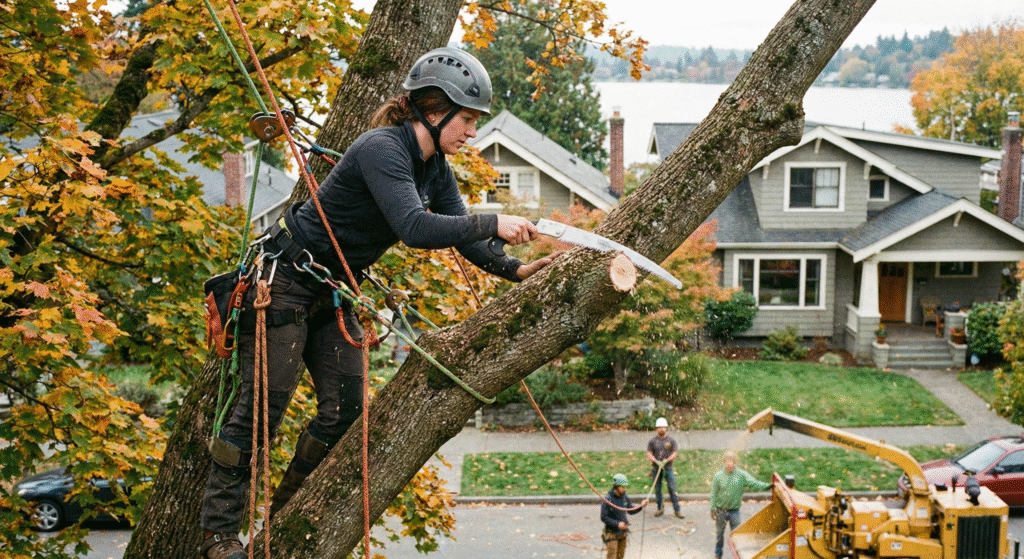
More than just cutting branches, tree trimming is an art/science of combining the aesthetic aspects of a tree (as an element of landscape) along with the biological/technical aspects for improving the overall health of the tree, enhancing safety, and creating visually appealing landscaping. Our ISA-certified arborist at Seattle Tree Trim and Removal understands the biological makeup of each tree species and uses established methods of pruning to stimulate healthy growth and maintain structural stability in all of our customers’ trees.
Investing time/money into proper tree trimming will add value to your landscape. Pruning regularly extends the life of your trees, provides preventative measures against diseases, removes hazards, and keeps the appearance of your trees, which are so important to the visual beauty of your outdoor space. From annual maintenance pruning to corrective pruning to specialty care, we deliver artistic as well as scientifically based results.
Our services include residential homeowners who are concerned about the look of their lawn and/or garden, and commercial property managers who know that well-maintained trees create a positive image for potential clients/customers, and help protect investments in their properties. Each pruning project starts with a thorough evaluation and is completed with healthier, safer, and aesthetically pleasing trees.
Benefits of Professional Tree Trimming
Improves Health & Vigor
Prevents Disease: Cutting away dead, infected, or dying branches will keep the pathogen from infecting the rest of the tree. The way you cut a branch determines how clean it heals; less chance for insect or disease to enter the tree.
Increases Airflow: Reduces the density of the tree’s leaves by thinning out branches to increase airflow, thus reducing the risk of fungi and reducing the likelihood of diseases. In order to prevent most tree diseases present in Seattle’s wet climate, it is essential to have good air flow.
Increases Sunlight: Allows sunlight to get to the inside branches and lower vegetation. Increases photosynthesis throughout the canopy and aids in developing a healthy growth habit.
Strengthens Structural Integrity: Corrective pruning when the tree is young creates the structural integrity of the tree for the remainder of the tree’s life. Removes competition between leaders, removes branches at poor angles, and removes weak connections to create a tree with structural integrity.
Maximizes Resource Allocation: Eliminates the necessity for trees to allocate energy towards dead wood or poorly located branches, allowing them to develop new growth.
Reduces Risks & Improves Safety
Removes Deadwood: Dead branches are unreliable and can drop at any time, creating danger for individuals, vehicles, and building structures below. Removing deadwood on a regular basis eliminates these dangers before they become a problem.
Maintains Clearance From Structures: Branches that touch or come close to a structure can damage roofing, siding, and gutter systems. These branches also provide paths for pests to move into a structure. Keeping the correct clearance around your home keeps your home as an asset.
Reduces Storm Damage: Prune trees to balance their canopies and remove weak or extended branches to make the trees more resilient to wind and other forms of storm damage. Removing these weak or extended branches prior to bad weather reduces the potential for failure.
Protects Power Lines: When trees grow into power lines, they create significant safety hazards and potential for loss of electrical power. Proper trimming of the trees creates safe clearances and helps maintain the tree’s health and appearance.
Improves Visibility: Raise the canopies and eliminate obstructions from branches to improve sightlines for driveways, intersections, and security cameras, which increases safety and security.
Get A Free Quote
Our Tree Trimming Services
Crown Thinning
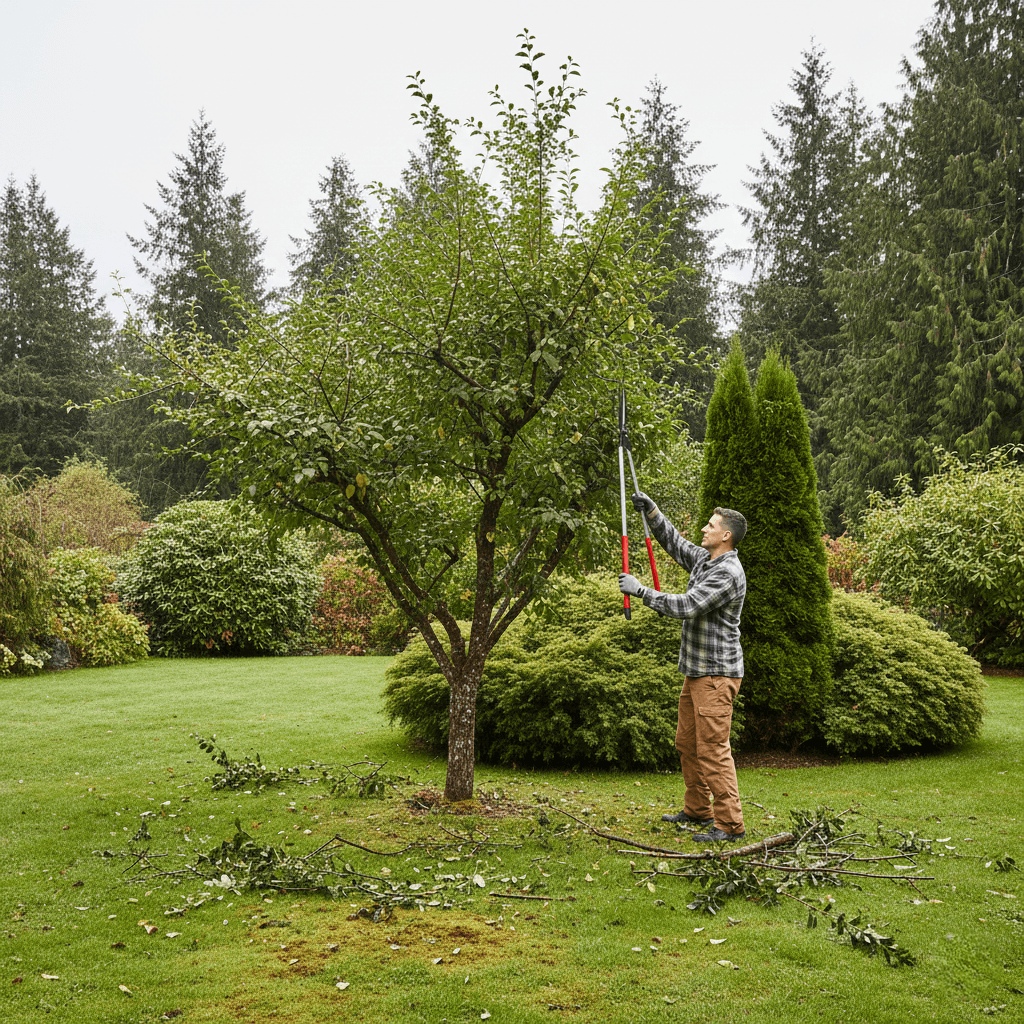
Thinning the crown is a selective branch removal process through the canopy to decrease density but maintain the natural shape and size of the tree. The process increases light penetration and improves airflow, and decreases wind resistance as it does not alter the tree’s form.
Good for: Dense deciduous trees; Trees have pests/disease associated with lack of air movement; Need more light than available when keeping the same tree size.
Our approach: We will remove no more than 25 percent of the total number of living branches in one visit. We select branches that are evenly distributed and retain the natural look of the tree.
Crown Raising (Limbing Up)
Crown raising involves cutting low branches off a tree to allow for clearance under the tree. It provides usable space and improved viewability. It also makes it possible for people to walk around and/or drive underneath the tree and/or cut grass under the tree.
Good for: Walking/driving areas; Improving sight lines at street corners; Creating clearance between buildings or vehicles; Growing grass under trees.
Our approach: We determine how much of the tree to raise (how many inches) based on the type and age of the tree. Removing too many of the lower branches can create stress on the tree, so we work with the biological limitations of the tree while still providing you with the desired practical results.
Crown Reduction
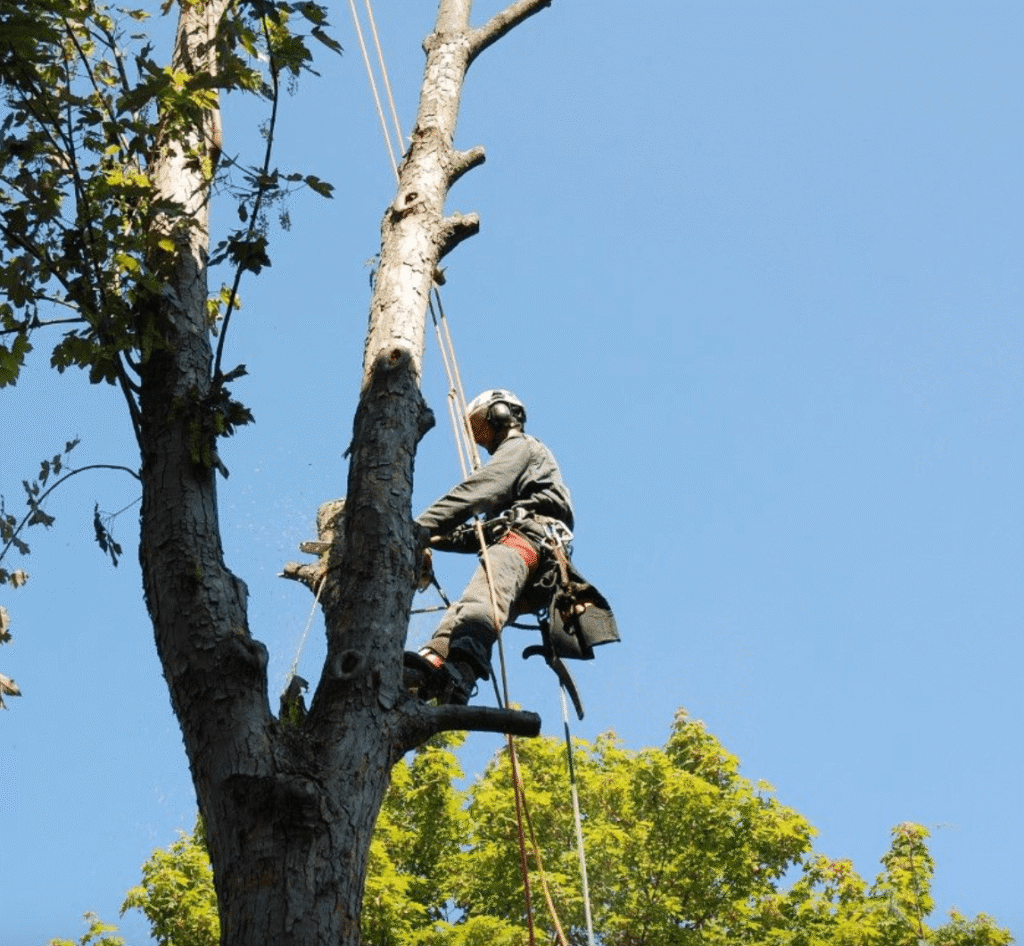
Crown reduction involves decreasing the height or spread of the tree by making cuts to lateral branches and pruning them back to those branches. This method of pruning is preferred to destructive “topping” methods because it will help maintain the natural form of the tree while limiting its size.
Good for: Trees that are growing taller/side-ward than the area they are in; Reducing the weight of weak branches; Allowing utilities to clear the line(s); Preparing vulnerable trees for potential storms.
Our approach: When performing a reduction, we will prune the tree to the correct lateral branches that are able to take on the role of the terminal (end) of the branch. By doing this, the tree will continue to grow naturally and remain structurally sound. We will not perform topping or heading cuts, which can be detrimental to the health of the tree.
Deadwood Removal
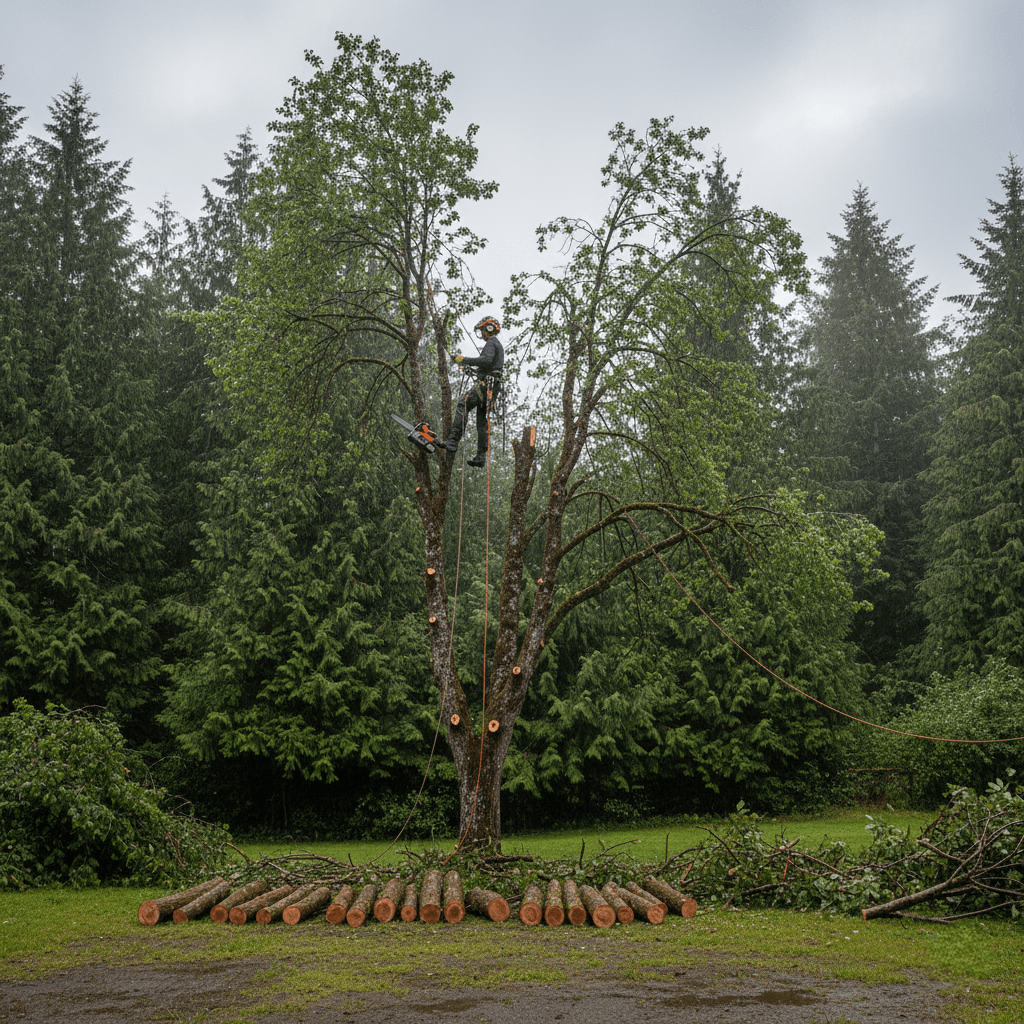
Removing dead, dying, and broken branches from the canopy removes potential hazards and promotes tree health by stopping decay organisms from moving into healthy tissues.
Good for: Safety-oriented maintenance; Preparing trees for an active storm season; General health maintenance of trees; high-volume foot traffic properties.
Our approach: When performing deadwood removals, we will visually inspect every section of the canopy and remove all dead, broken, and dying branches. Deadwood removal may be performed in conjunction with other pruning techniques to ensure comprehensive care of the tree.
Seasonal Considerations
Optimizing Your Timing
Timing your pruning for the right time of year is important because each tree species has a different optimal time for pruning:
Pruning During Winter (Tree Dormant Season): This is the typical time to prune many types of deciduous trees. Benefits of this type of pruning are:
– Easy to see the overall shape of the tree since there is no foliage.
– Reduced chance of spreading disease between trees.
– Minimal stress to the tree.
– Vigorous spring growth.
Best for: Most deciduous trees, such as maple, oak, ash, and other shade trees. Major structural changes to the tree and significant reductions in tree size.
Pruning During Spring: Pruning is best for trees that “bleed” a lot of sap when they are pruned while dormant, like maples and birches. It is also good for removing any storm damage that occurred during the winter months.
Considerations: Do not prune an oak tree in the spring if you live in an area where oak wilt exists. Oak wilt is spread by disease through open wounds made by pruning.
Pruning During Summer: Pruning lightly in the summer will slow down the growth of the tree, making it easier to manage the tree’s size. Pruning can also help correct any storm damage that may have occurred during the previous year.
Best for: Managing tree size, corrective pruning, deadwood removal, and any hazardous conditions that need to be addressed.
Pruning During Fall: It is generally not recommended to prune a tree during fall because the tree will be at its highest risk of disease, and the wound healing process will be slowed down as the tree prepares for dormancy.
Exceptions: Removing deadwood and eliminating any hazardous situations can be done at any time, especially if it is a matter of safety.
Species-Specific Timing
Pruning Flowering Trees: Depending on when your tree flowers, you will know how to prune it. If your flowering tree blooms in the spring (like cherry blossom, magnolia, and dogwood), you should prune it immediately after it finishes blooming. If your flowering tree blooms in the summer, you can prune it while the tree is dormant.
Pruning Fruit Trees: Late winter pruning will promote healthy growth in your fruit tree and increase the quality of your harvests for most varieties of fruit trees.
Pruning Evergreen Trees: Pruning evergreen trees can be done at almost any time of the year. However, late winter to early spring is usually the best time.
Pruning Maple and Birch Trees: To minimize the amount of sap flowing out of your maple or birch tree, you can prune it either after its leaves have reached full maturity or during the tree’s full dormancy in the winter.