Seattle Tree Trim and Removal - Frequently Asked Questions
Frequently Asked Questions
Are you licensed and insured?
Absolutely. We carry comprehensive general liability insurance and workers’ compensation coverage to protect both our team and your property. We also maintain all required business licenses for operating in Seattle. We’re happy to provide certificates of insurance upon request before any work begins.
Do you offer free estimates?
Yes, we provide complimentary, no-obligation estimates for all our services. A certified arborist will visit your property to assess your trees, discuss your needs, and provide a detailed written estimate. There’s no charge for this consultation, and you’re under no obligation to proceed with the work.
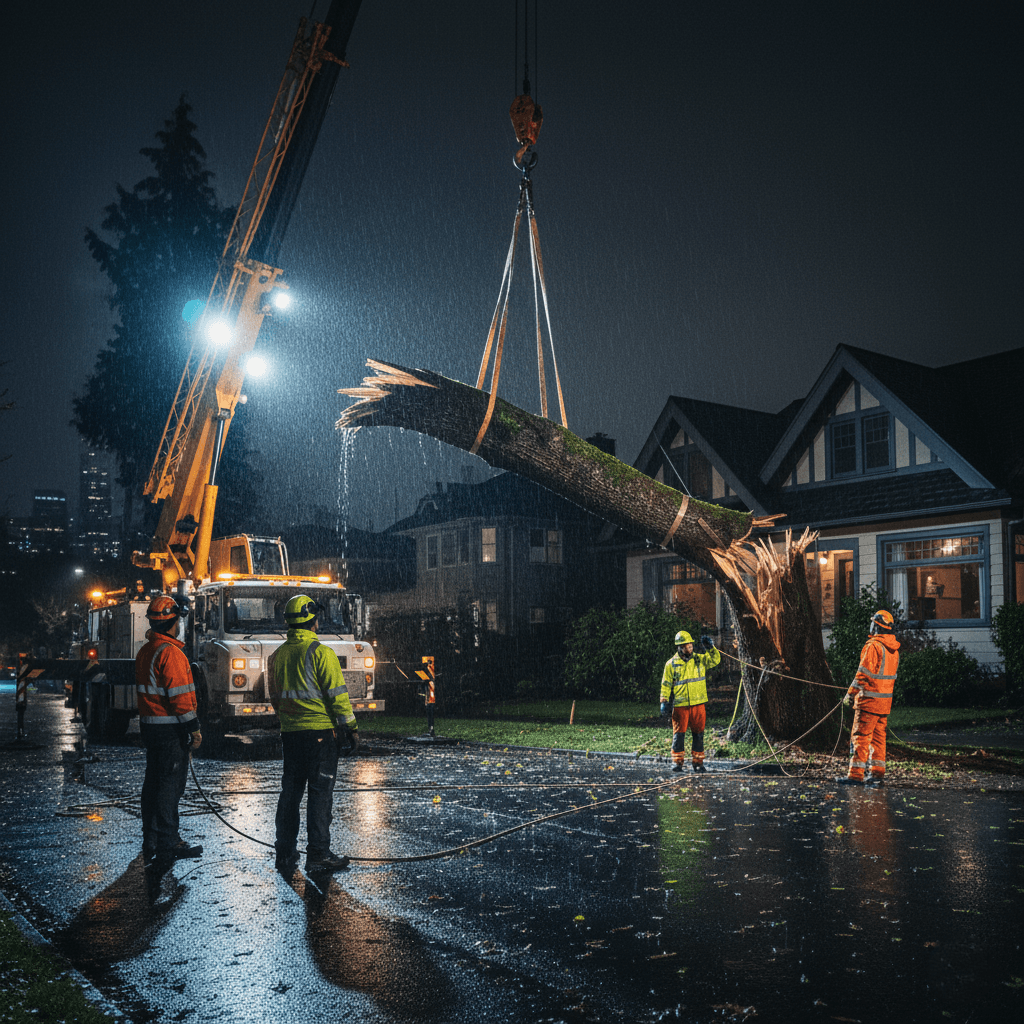
How quickly can you respond to emergency tree situations?
We offer 24/7 emergency tree services and typically respond within 2-4 hours of your call, depending on the situation and our current location. For life-threatening emergencies, we prioritize immediate dispatch. Our emergency hotline is answered by real people who can assess your situation and mobilize crews quickly—not voicemail or answering services.
Do I need a permit to remove a tree on my property in Seattle?
It depends on the tree’s size, species, and location. Seattle has specific regulations regarding tree removal, particularly for significant trees or those in environmentally critical areas. During your free consultation, we’ll help you determine whether a permit is required for your specific situation and can assist with the application process if needed.
Under what specific conditions will the city grant approval for a tree removal permit?
Valid justifications for approval include a tree being deemed hazardous (requiring an ISA Tree Risk Assessment Qualification (TRAQ) evaluation), the specimen being dead or diseased, the presence of severe infrastructure conflicts, or removal being necessary for a proposed development project. For hazardous tree removal, the required documentation must be submitted within 10 calendar days following the removal.
Are property owners required to provide notice to neighbors before commencing tree removal?
Yes. Seattle regulations mandate that a public notice be posted on-site for six full business days before any commercial tree work begins. The notice must remain posted throughout the work period and for five days after completion. This requirement covers most tree removals and major pruning activities on private property.
What is the typical budget range for professional tree removal services in Seattle?
Tree removal costs fluctuate significantly based on various factors. Generally, smaller trees cost between $400–$700, medium-sized trees range from $800–$1,800, while the removal of large or highly hazardous trees frequently exceeds $2,500 and can be substantially higher.
What happens to the wood and debris after tree removal?
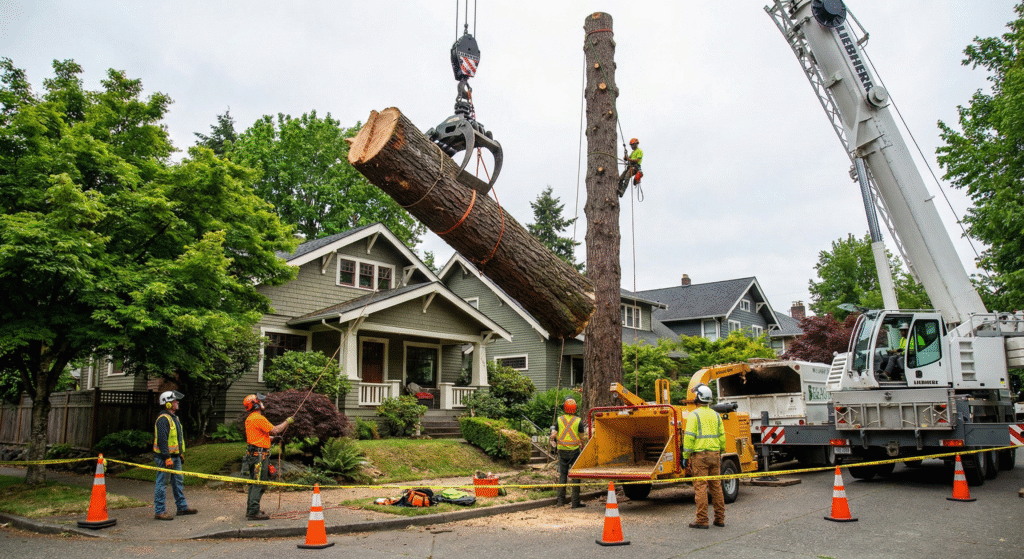
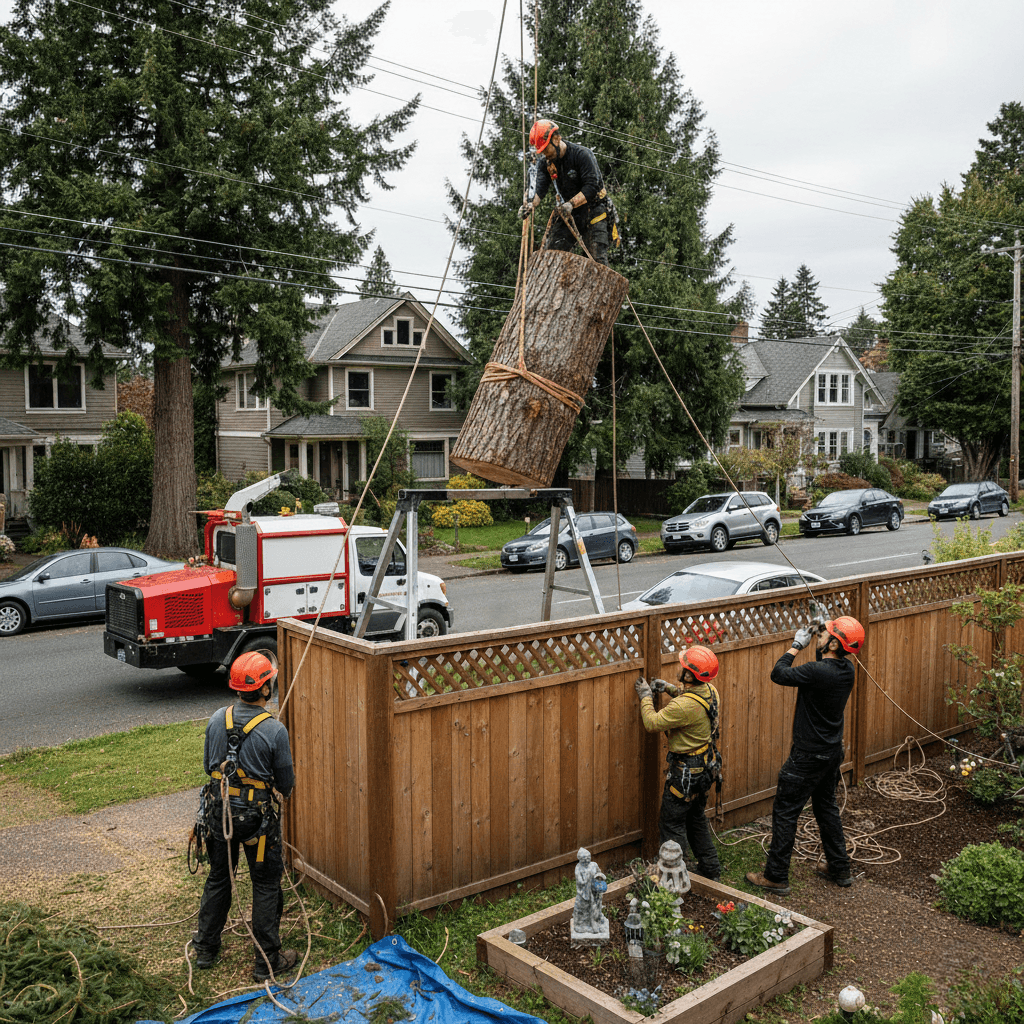
We remove all branches, logs, and debris from your property as part of our standard service. The wood is either recycled into mulch, processed for firewood, or disposed of responsibly. If you’d like to keep the wood for your own use as firewood, just let us know during the estimate—we’re happy to cut it into manageable pieces and stack it for you at no additional charge.
What is the standard price range for stump grinding services in Seattle?
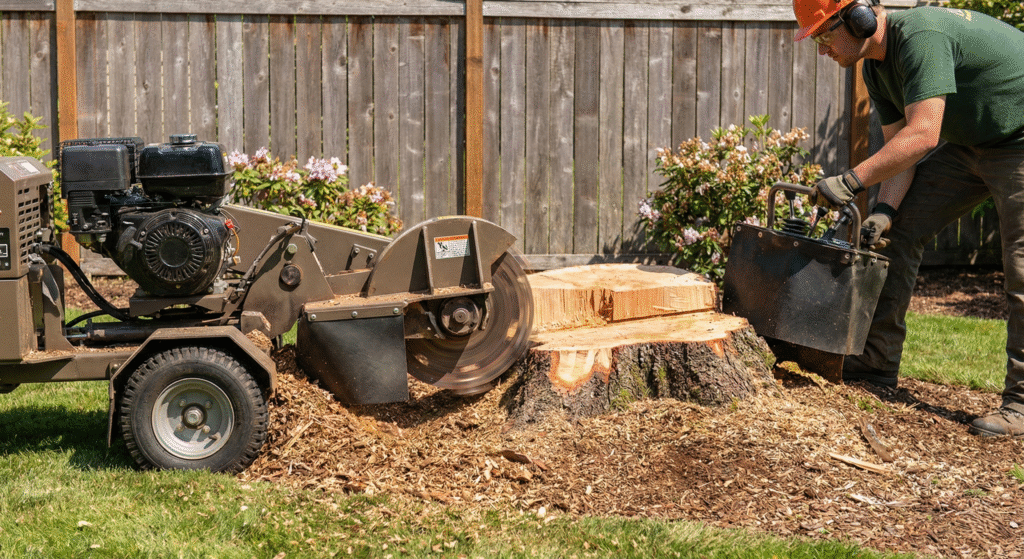
Stump grinding services in Seattle typically cost between $250–$550. The price depends on the stump’s diameter, the complexity and size of the root system, the ease of access to the location, and other unique urban site challenges common in the Seattle area.
Is there a price premium for emergency tree removal services?
Yes. Emergency response pricing is higher due to the urgent scheduling, the potential for overtime labor, the inherently hazardous operating conditions, and the requirement for immediate availability in response to safety threats or storm damage.
What visual signs indicate a tree is dead, dying, or in decline?
Key indicators include the absence of leaves during the typical growing season, branches that are brittle or cracked branches, bark peeling away or separating from the trunk, the presence of fungal growth (mushrooms) at the base, a hollow sound when the trunk is tapped, or an excessive amount of dead wood throughout the tree’s canopy.
How effective are chemical treatments for eliminating tree stumps?
While chemical applications can hasten the decomposition process over a period of months or years, they are typically insufficient on their own. Professional grinding or excavation methods offer more reliable, timely results and effectively prevent any root system regrowth.
Am I legally allowed to prune branches that overhang my property from a neighbor's tree?
Yes, Washington State law permits you to trim branches that extend over your property line, provided you remain on your side of the boundary and do not enter your neighbor’s property. You mustn’t compromise the tree’s health or structural integrity, and you must dispose of the debris properly rather than placing it back on your neighbor’s property.
If a neighbor's tree causes damage to my property, who is financially responsible?
Washington law often applies the “act of God” rule: if a healthy tree falls during an unpredictable storm, your own homeowner’s insurance will generally cover the damage. However, if the tree exhibited evident signs of hazard, neglect, or disease that the owner was or should have been aware of, the neighbor may be held liable.
Is neighbor consent required for the removal of a tree that sits directly on the property line?
No. Under Washington law (RCW 64.12.030), trees that straddle a boundary line are legally classified as common property. Any major trimming or removal necessitates written consent from all affected property owners. Violations can result in severe penalties, including civil liability, attorney fees, and treble damages.
What's the best time of year to trim or prune trees?
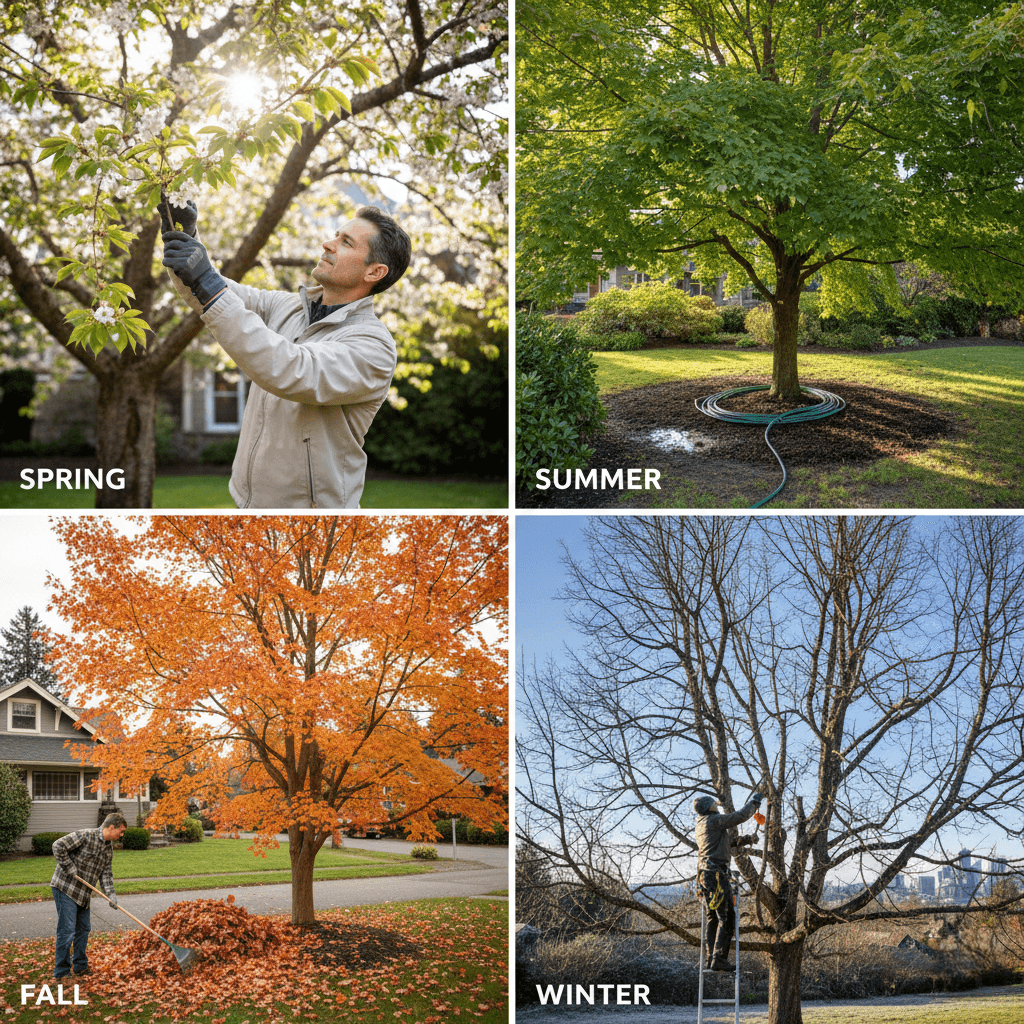
For most deciduous trees in Seattle, late winter or early spring (while dormant) is ideal for major pruning work. However, the optimal timing varies by species—for example, flowering trees are best pruned right after they bloom, and some trees benefit from summer pruning. Dead branches and safety hazards should be removed immediately regardless of season. Our certified arborists will recommend the best timing for your specific trees during the consultation.
What is the typical timeframe for a root system to naturally decompose underground?
The natural decay of large root systems may take anywhere from five to ten years in Seattle’s specific climate conditions. The decomposition rate is dependent on factors such as soil moisture, temperature, the tree species’ characteristics, and the original size of the root structure.
What are the immediate steps to take if a tree falls and strikes my house?
Your priority must be safety: evacuate the home if necessary and strictly avoid contact with any downed power lines. Document the damage extensively with photographs for your claim, then immediately contact both your insurance carrier and a registered tree service provider for emergency removal.
Under what conditions does homeowner's insurance cover the cost of storm-related tree removal?
Insurance policies typically cover the cost of removal only when a fallen tree causes damage to insured structures or obstructs necessary access points. Standard policies generally do not cover the cleanup of fallen trees that caused no property damage. Always review your specific policy and document all damage thoroughly.
Under what circumstances can I be held legally liable for damage a tree causes to a neighbor's property?
Yes, under Washington law, you may be held liable if you were or should have been aware of a tree hazard and failed to take corrective action. Washington’s timber trespass statute (RCW 64.12.030) allows for civil liability, attorney fees, and the imposition of treble damages for tree-related violations.