Menu
Should You Trim Your Trees Before a Seattle Storm?
Tree Trimming Seattle
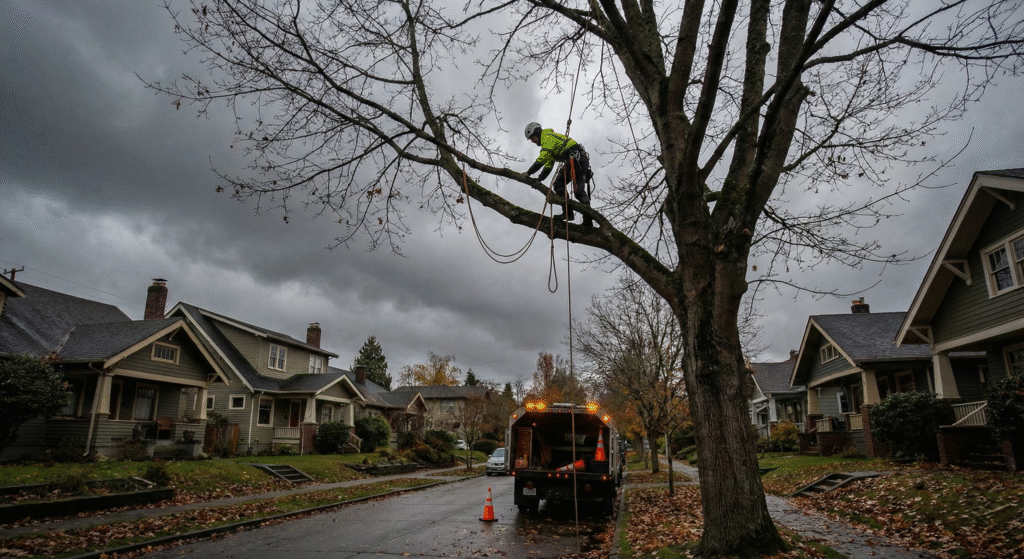
Seattle’s weather swings are known for producing violent storms with very high winds and heavy rain. That is one of the reasons homeowners will begin to search for tree trimming near me as soon as it appears there may be an upcoming storm season. Homeowners typically inquire if preemptively pruning their trees will help them prevent damage from storms. The response is somewhat complex; although last-minute trimming before a storm will generally cause much more harm than good, seasonal planning for tree maintenance will undoubtedly minimize the potential for tree failures when a severe storm hits Seattle. Seasonal planning increases the strength of your trees, thereby minimizing the possibility of catastrophic loss when severe weather arrives.
The Logic of Planning for the Storm Season
Trees that are healthy, well-maintained, and have no structural defects have the best chances of withstanding the force of high winds and saturated soils. A professional tree care company does not focus solely on preparing for the next forecasted storm; rather, it improves the tree’s ability to withstand future storms over time, through annual assessments of potential hazards.
The Most Immediate Threat During Severe Weather Events
The single largest threat to your trees during a severe weather event is deadwood, diseased branches, and broken limbs. The wind picks up these weakened sections of the tree, creating an imbalance in the forces acting on the tree, which creates stress on the tree. It is a main objective of professional tree trimming to eliminate these hazardous elements of the tree. Additionally, removing dead material reduces the amount of wind-borne debris that can be generated and protects surrounding structures and utilities, especially in residential areas, where space is limited.
Wind Resistance Reduction Through Canopy Thinning
A dense canopy provides more surface for the wind to act upon, creating additional resistance to the wind. As a result, the tree becomes a large sail, providing greater stress on the trunk and roots of the tree, often resulting in the loss of the tree itself. By performing strategic crown thinning (a professional tree trimming service), interior branches can be removed from the canopy, reducing the total resistance to wind. This results in a significant reduction in the stresses placed on the tree during a gale.
Why It’s Not Advisable to Perform Large-Scale Pruning Before a Major Storm
While the desire to get your property ready for a major storm is understandable, performing a large-scale pruning operation in the short time frame before a major storm occurs is not recommended. Performing such a task creates many more problems than it solves, and leaves your tree in a poor position to withstand the coming storm.
Tree Wound Healing Timing and Tree Vulnerability
Tree wound healing takes time. If a tree is pruned too close to a storm, new wounds are created, and the inner tissues of the tree are exposed to water-borne pathogens and high stress factors. Such a situation defeats the purpose of trying to protect the tree. Pruning should take place during the dormant season or well in advance of the anticipated stormy period, to allow the tree sufficient time to heal.
Risks Associated With Hasty Work
When professionals are forced to rush their work, safety is usually sacrificed. Inclement weather while working on a tree makes both the crew and the property at risk. A reputable arborist will not climb or use heavy equipment during adverse weather conditions. Schedule your tree work to take advantage of the safest possible weather conditions, even if it means delaying the completion of the work.
Importance of a Certified Arborist’s Hazard Assessment
The best method to prepare your trees for a Seattle winter is through a thorough hazard tree assessment in WA by a certified arborist. An arborist will evaluate the tree’s structural integrity and overall health based on scientific criteria, not simply aesthetic considerations.
Hidden Structural Defects in Trees
Often, the reason why a tree fails is not because of a broken limb, but due to a structural defect in the root system or trunk. An arborist can identify evidence of hidden decay in the trunk, or the presence of root rot due to the saturated Seattle soil, or weak branch attachment points, which may go unnoticed by the average person. For example, trees located near the slope of Queen Anne Hill often need to be stabilized due to changing soil conditions. Identifying and repairing these structural weaknesses, using techniques such as cabling or bracing, is the most successful method for long-term protection of your trees before a storm.
Creating a Long-Term Maintenance Program
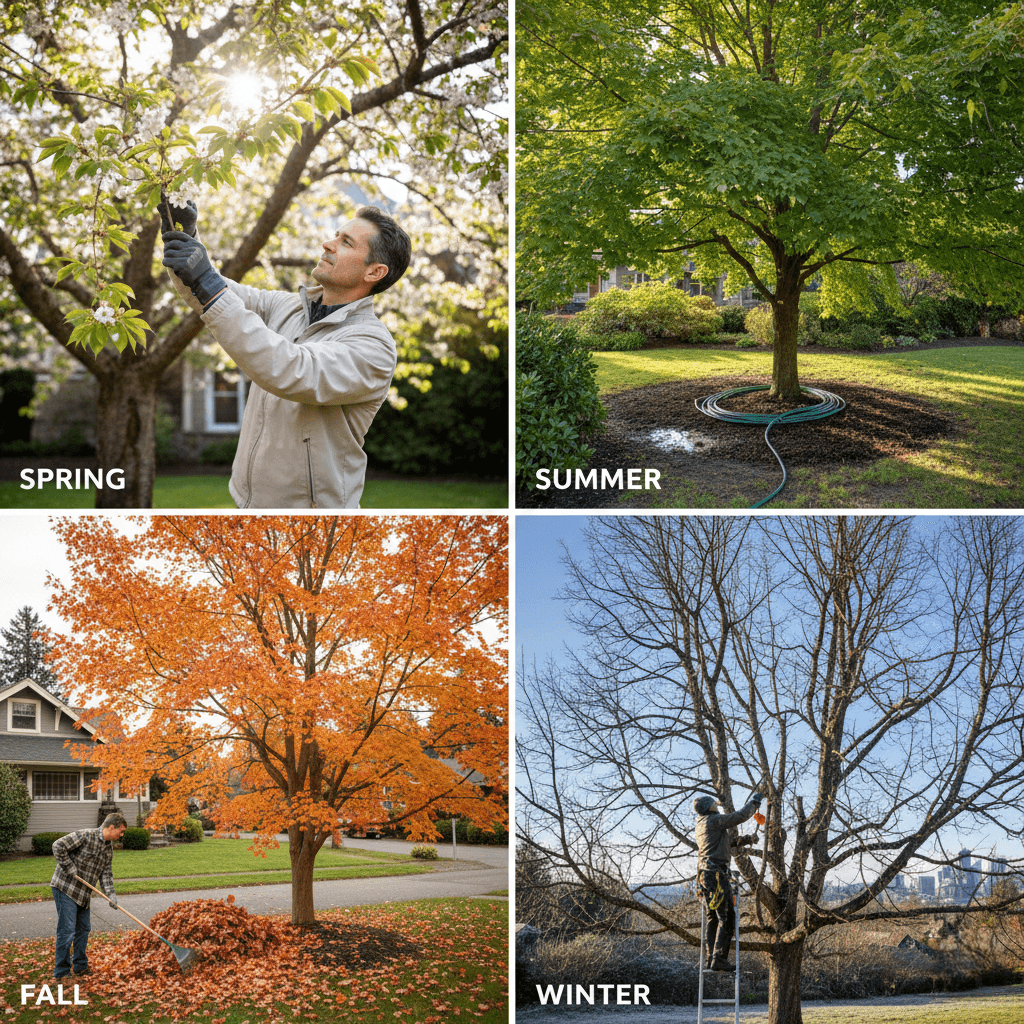
Preparing for a storm is an ongoing responsibility, not a once-in-a-lifetime fix. A certified expert will create a long-term tree care plan specifically tailored to meet the unique requirements of the species of trees located on your property. The long-term plan includes scheduling pruning for structural health during the dormant season and monitoring high-risk trees each year. Adhering to the plan will help ensure that your trees will continue to be able to withstand extreme winds, each and every year, so you can enjoy continued winter tree maintenance in Seattle.
Post-Storm Assessments and Emergency Response
Even with proper planning and precautions, sometimes severe weather will cause damage to your trees. Understanding what steps to take in response to damage is nearly as important as the pre-emptive measures you took.
Responding Safely After a Storm
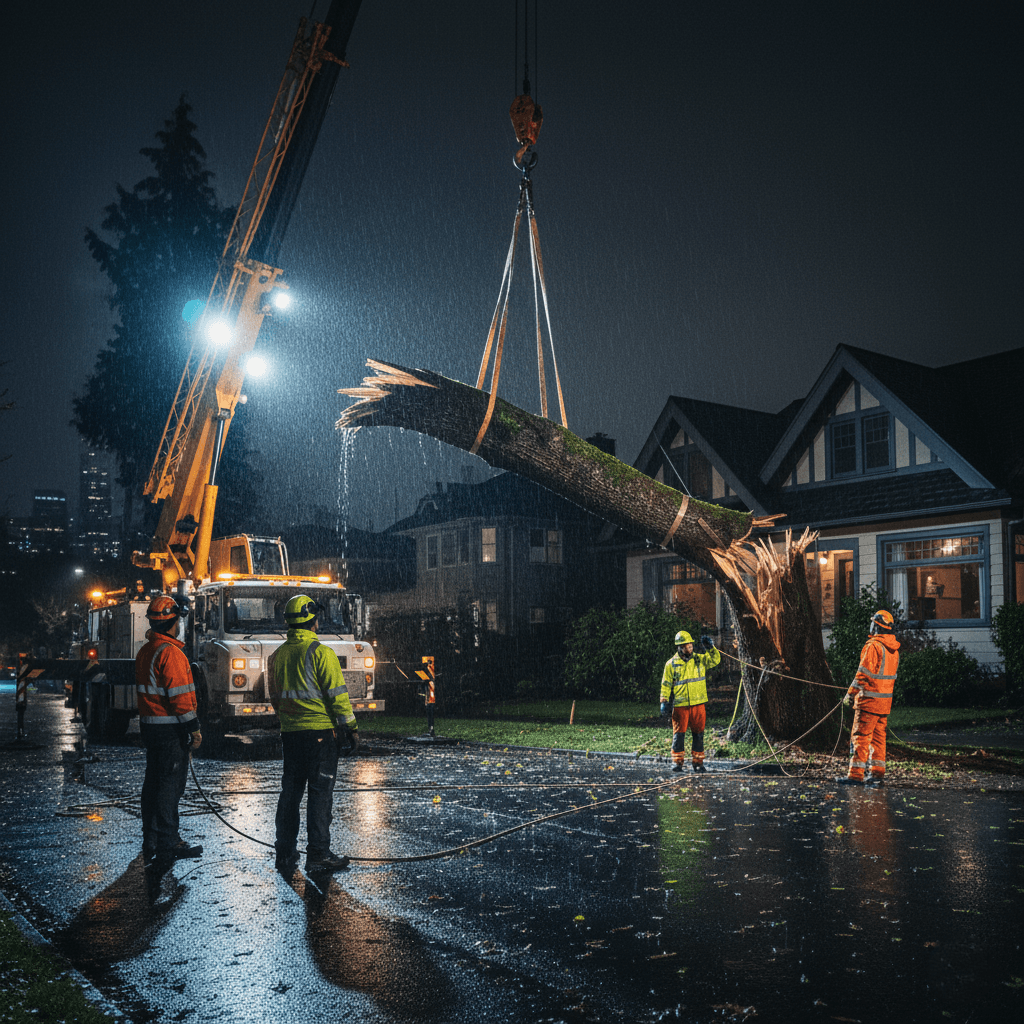
You should never attempt to remove large branches or downed trees yourself, especially if the trees are near power lines or resting on structures. Downed trees are highly stressed and can suddenly move, injuring you. Secure the area where the damage occurred and call a professional tree service to assess and repair the damage. Only qualified personnel and equipment will be able to safely remove the debris and support damaged trees to prevent further incidents.
Emergency Post-Storm Services
Professional tree services provide 24/7 emergency services for post-storm clean-up. They will dispatch crews to respond to time-sensitive situations, such as trees obstructing access or those trees that are likely to fall onto a home. When selecting a service provider, choose one that has experienced personnel, equipment, insurance, and rapid deployment capabilities to restore order to your property.
Protecting Your Property for the Season
Ultimately, the best way to prepare for storms is through a routine of regularly scheduled and properly timed pruning and maintenance. Avoid last-minute pruning decisions when the storm warning sounds. Consistent and well-timed tree maintenance will keep your trees’ canopies strong and structurally sound. At Seattle Tree Trim and Removal, we believe in the importance of being prepared for our often unpredictable weather. To receive expert guidance and timely maintenance that protects your trees from the elements of the Pacific Northwest, please contact us today.
LATEST POSTS