Menu
Tree Pruning Best Practices for Seattle’s Unique Urban Trees
Tree Pruning Seattle
The City of Seattle has a unique reputation for being covered with many beautiful, natural environments, including an urban forest composed of native coniferous species and various types of decorative, ornamental hardwoods. A critical component to maintaining these trees’ physical and structural health is through the use of research-based techniques to prune them. Pruning trees effectively is an important and proactive investment in helping the wonderful trees we have grow in the wet conditions and the confined spaces of urban Seattle. If a tree is improperly pruned, it may cause irreparable harm to the tre,e which could compromise its overall health and safety. Therefore, all tree pruning should be done by professional arborists.
Why Prune Your Seattle Trees Strategically?
While many tree pruning methods are the same regardless of where you live, the Pacific Northwest’s climate is different and therefore influences how we prune our trees in ways that are not typical of other regions. The amount of rain and mild temperatures Seattle experiences results in more robust growth compared to other climates, which means there is a greater need for strategic thinning of branches to manage the wind force associated with the tree and help prevent disease. As a result, the success of tree care services in this area largely depends on the use of local knowledge to ensure that the techniques used address the unique characteristics of the local species within the urban ecosystem of Seattle.
Recognize Local Trees & Climate
Pruning Seattle’s ornamental cherry trees and Western Hemlocks in the same way will yield vastly different results due to their responses to the environment in different seasons. Mature Big Leaf Maple trees have large, dense canopies, which create a need to carefully remove weight to decrease the likelihood of branch failures during the winter months. When considering the climate of Seattle, high levels of moisture will foster the growth of diseases, such as fungal rot, so cuts made for pruning should include features that promote airflow and help reduce the accumulation of water in the tree to maintain tree health.
Compliance with Regulations
Tree pruning services are subject to very stringent rules regarding tree pruning in Seattle, particularly for trees identified as being of Exceptional or Significant quality. If you reside next to a designated park space, such as Volunteer Park, you may be familiar with some of the zoning restrictions. Before engaging in any significant pruning activities, it is essential to become familiar with the relevant zoning regulations to ensure compliance. Certified arborists offer the support needed to secure the required permits and document the pruning activities in accordance with local environmental standards to protect both the homeowner and the tree from possible municipal penalties or litigation.
Guidelines for Best Pruning Practices
Certified arborists adhere to the guidelines of ANSI A300 (American National Standards Institute), which is the standard for the industry regarding tree care. The goal of the pruning process is to enhance the structural integrity and overall health of the tree while preserving its natural appearance. To accomplish this objective, arborists must make clean cuts at the appropriate anatomical locations of the tree, referred to as the branch collar, to enable the tree to properly seal the wound.
When to Prune & The Downtime
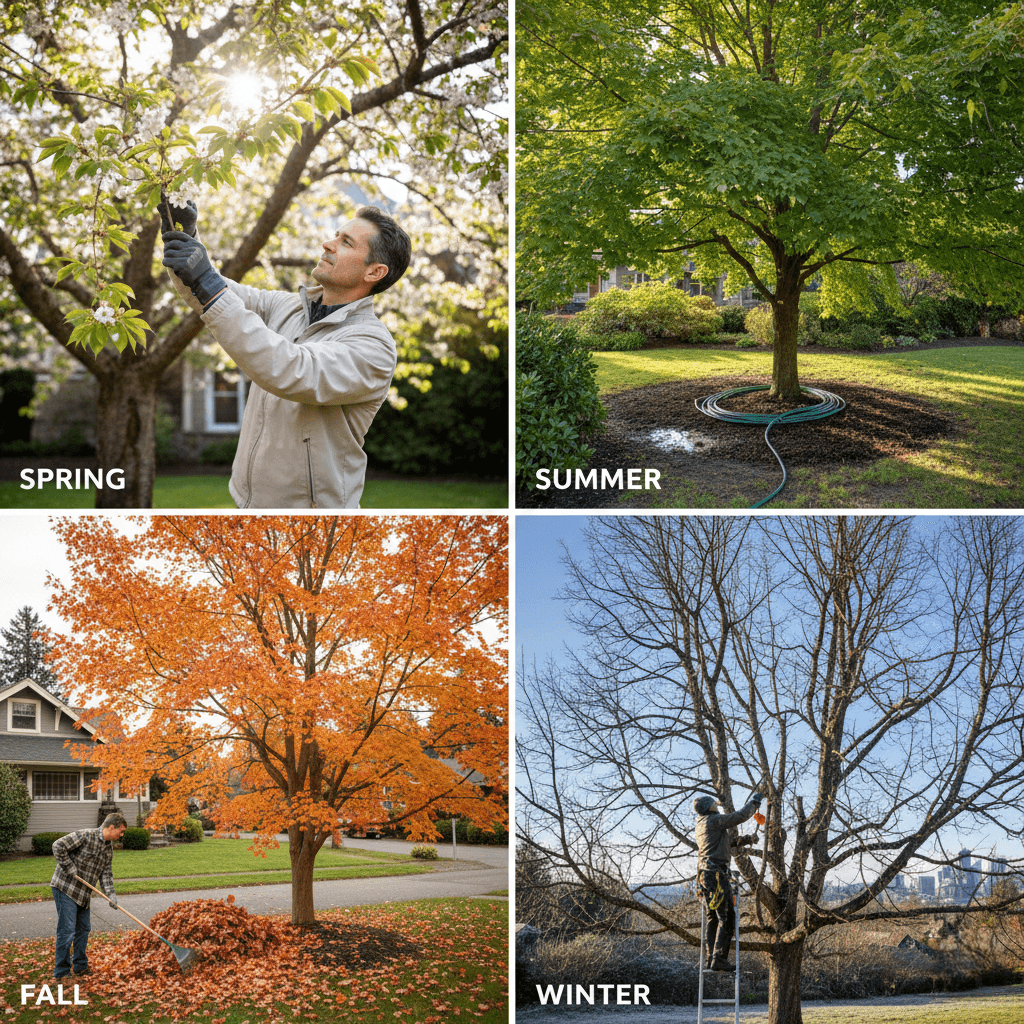
Typically, the best time for performing the majority of structural pruning activities is during the tree’s dormant period, usually between late fall and early spring. By conducting pruning during this timeframe, the arborist minimizes the amount of stress placed upon the tree and reduces the possibility of attracting insects and other pests that thrive during the warmer months of the year. In addition, the dormant season provides the arborist with an unobstructed view of the branching structure, enabling them to develop a thorough plan for the pruning activity. Consequently, this approach enables vigorous growth and proper wound closure upon the onset of spring growth. Although, depending on the species, there may be specific times to prune; for example, flowering varieties are frequently pruned immediately after they complete their blossoms.
Three Primary Techniques Used to Prune Trees
Arborists generally employ three primary techniques for pruning trees in order to achieve healthy tree development. The first technique, crown thinning, involves selectively removing interior branches of the tree in order to allow increased light penetration and air circulation into the canopy of the tree and to decrease the wind resistance of the tree. The second technique, crown raising, involves removing the lower branches of the tree to provide clearance for buildings, pedestrians, or vehicles. The third technique, crown reduction, involves decreasing the size of a tree’s canopy and is generally limited to situations involving safety or clearance considerations. and must be performed very carefully to avoid placing unnecessary stress on the tree. Based upon the age, species, and location of the tree, an experienced Seattle ISA arborist/trimmer determines the best technique to utilize.
Safety Considerations & Expertise
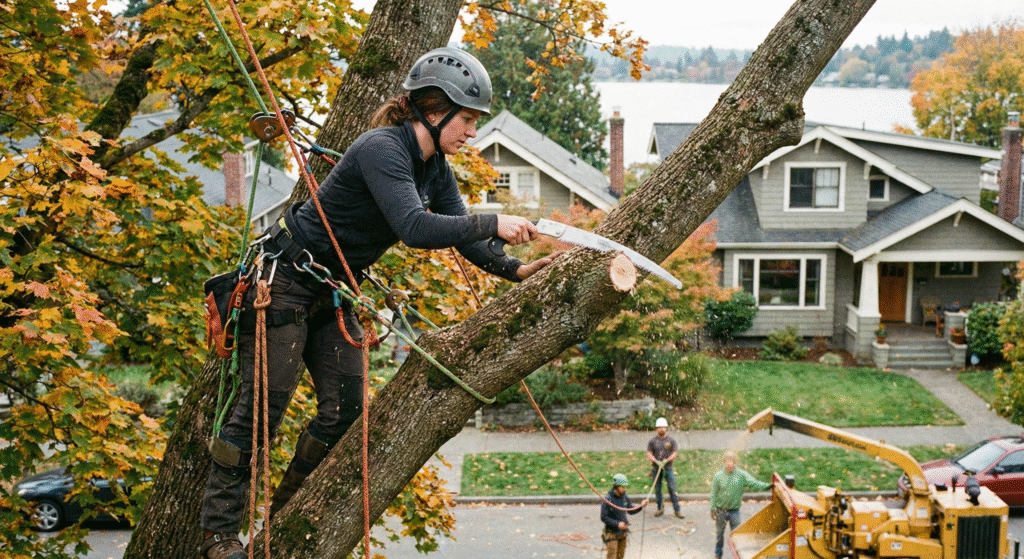
Due to the inherent dangers associated with pruning large, mature Seattle trees, tree pruning must involve special skills, safety equipment, and procedures. Conducting a DIY pruning project using complex techniques is extremely hazardous and not recommended. Prioritizing the safety of everyone involved is paramount, and utilizing a reputable professional service is essential in achieving this priority.
Controlling Risks & Eliminating Hazardous Conditions
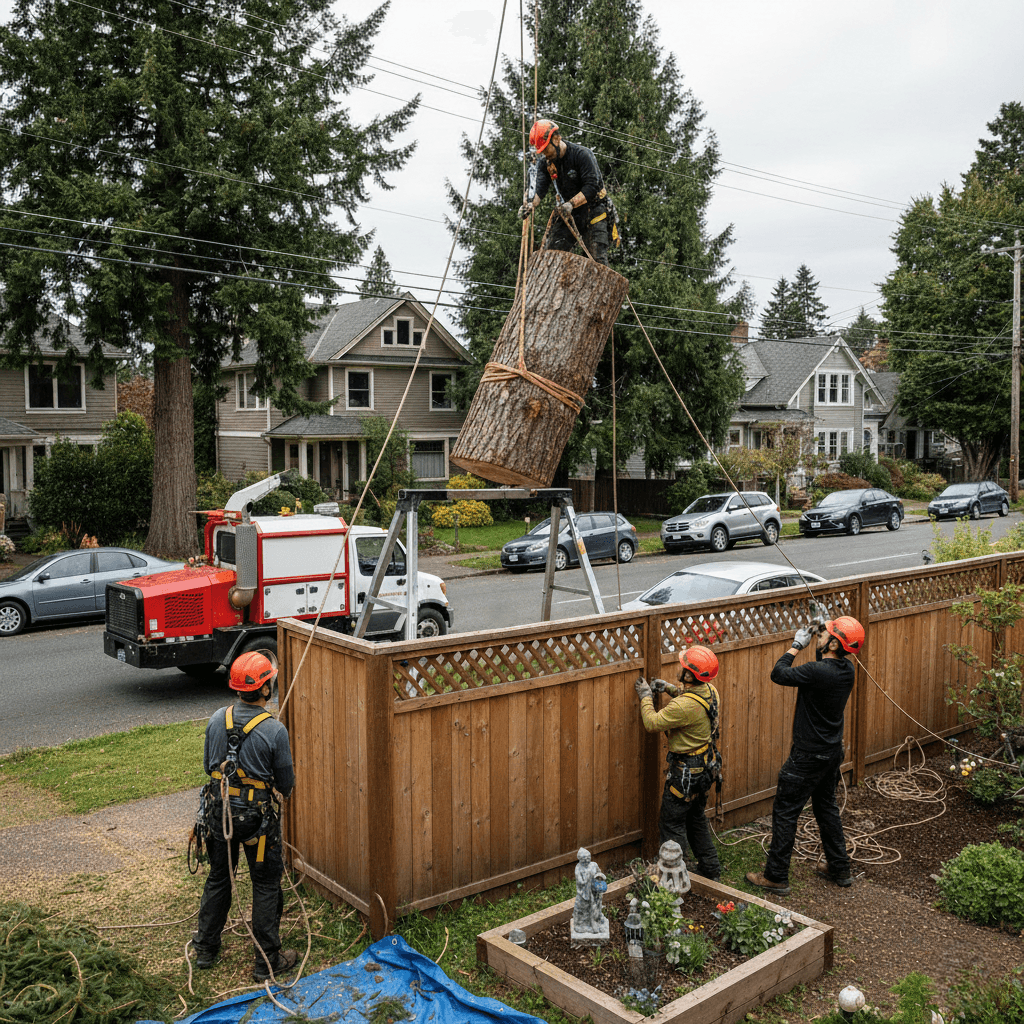
Expert crews will take numerous precautions to ensure worker safety and property protection, including employing advanced climbing techniques, rigging, and aerial lift operations. Arborists systematically identify and evaluate the potential risks associated with the tree and the surrounding environment, such as power lines, property boundaries, and traffic flow. Allowing the crew to thoroughly prepare and plan for the removal of all falling limbs before pruning will allow for the safe direction of all falling limbs to the ground. While eliminating hazards is a critical element in mitigating risk, it is not the only factor; rather, it is one aspect of a more comprehensive risk mitigation strategy that only experienced professionals can provide.
Technical Skills & ISA Certification
Selecting a certified arborist ensures that your tree is cared for by someone who possesses extensive technical knowledge regarding tree biology and proper tree pruning techniques in Seattle. A certified arborist has the ability to diagnose defects in the structure of the tree, pest infestations, and diseases that an inexperienced person might completely overlook. Certified arborists can also recommend targeted treatments, thereby ensuring that the arborist makes cuts that will trigger the tree’s natural defenses to remain healthy for years to come instead of declining.
Increasing Longevity & Aesthetic Appeal
Maximizing a tree’s longevity and contributing to the aesthetic appeal of a property are directly related to proper tree pruning. Well-maintained trees are visually appealing and contribute greatly to improving safety by preventing catastrophic branch failures.
Promoting Structural Integrity in Young Trees
Young tree pruning in Washington State is focused on establishing a strong central leader and well-spaced scaffold branches. Proactive structural pruning can guide the growth of the tree to avoid developing weak branch attachments and co-dominant stems. Through investing in early and ongoing pruning, you will likely eliminate the need for costly and potentially hazardous corrective pruning later in the life of the tree.
Increasing Property Value & Curb Appeal
Well-shaped, healthy trees are considered an asset to properties, and contribute to higher property values and provide natural shading and cooling. The aesthetic enhancements resulting from skilled pruning activities are immediate and visible. An aesthetically pleasing, balanced canopy is infinitely more desirable than an unevenly shaped or densely packed canopy. Therefore, your long-term investment in the proper maintenance of your trees will yield substantial returns in both functional and financial terms.
Choosing the Right Partner for Tree Care
Several factors make it essential to select a competent, reliable company for tree care services in Seattle, including the complexity of local regulations, the susceptibility of native species to disease, and the inherent dangers of working at heights. Property owners must insist upon hiring certified arborists who provide genuine pruning best practices and not merely unqualified tree cutting services. We are committed to adhering to the highest standards of safety, biological understanding, and local regulatory compliance. For comprehensive and expert care to preserve the beauty and health of your valuable urban trees, we invite you to contact us at Seattle Tree Trim and Removal. We look forward to partnering with you to protect and beautify the unique canopy of the Emerald City.
LATEST POSTS