Menu
Seattle Stump Removal: When It Beats Grinding
Stump Removal Seattle
A property owner may elect to remove a tree due to several potential causes, such as an unsafe structure or in preparation for a renovation or landscaping. The decision on how to treat the remaining (buried) root system after cutting down the primary trunk lies between grinding and complete stump removal. Removing the stump completely involves fully excavating the stump and all lateral branches. Removal of the entire stump is not always the best option; however, if the project requires this type of removal to be completed in order to proceed with your project (i.e., in Seattle), then complete removal of the stump will be the only method by which you can achieve what you need. The property owner must understand the determining factors that differentiate between grinding and removing a stump in order to make a smart, long-term investment in their property.
The Difference Between Stump Removal and Stump Grinding
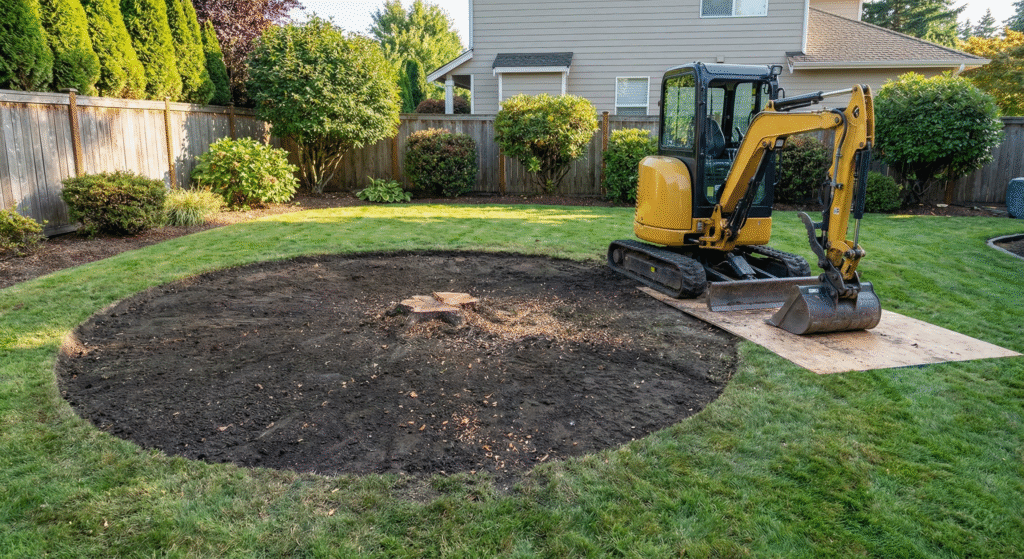
Tree stump removal and stump grinding have essentially opposite effects. Grinding chops the stump down into small chips (chips) about 6-8 inches below grade level and leaves behind the entire root system. On the other hand, a complete tree stump removal involves completely digging up the entire root crown and the first 2-3 feet of the main roots with heavy machinery, thereby creating a void that will require immediate backfill and compaction, and removing the organic matter and risk of future rot.
Why Full Root Removal Is So Important in Seattle
Mature trees have large and surprisingly resilient root systems, especially those found in Seattle, such as Douglas Fir and Western Red Cedar. Although the root structure may be greatly reduced through grinding, the remaining roots continue to break down and create pockets of voids beneath the surface, and will eventually cause settling problems. Through a full removal of a tree’s root system in Seattle, you gain the greatest degree of certainty in the short term that there will be no further decomposition of organic material in the soil, which is crucial when you want to utilize the area heavily or have plans for building.
Construction, Paving, Foundations, and Retaining Walls
Before any new construction takes place, including laying new foundations, installing retaining walls, or pouring large concrete slabs, you need a firm and stable sub-grade. If a decayed root system exists beneath the new foundation, the new foundation will eventually settle and crack, and eventually fail. It is therefore mandatory to remove large tree stumps in Seattle before beginning any shovel work for construction to eliminate any organic material existing below the new foundation to provide a solid base to support the future structure.
When Is Full Root Removal Required?
For many reasons, some projects require a full removal of the stump and root structure. Some of these reasons include engineering requirements, infrastructure needs, and/or large-scale landscaping requirements. Not completing a full removal in these instances will inevitably result in complications and expense down the road, compromising the integrity of the entire project.
Planting A New Tree In The Same Location
Should the plan call for replanting a new tree in the exact location where the previous tree was located, a complete removal of the stump and its root system is necessary. The decaying roots of the original tree form a dense, unsuitable environment for the root ball of the new tree. The residual organic matter created by the decaying roots of the original tree contains pathogens that can infect the new tree before it has the opportunity to become established. The removal of the root system allows for the creation of an organic-free zone in which to plant the new tree. Once the stump is removed, the void created by the removal can be filled with a rich, organic soil to provide the best possible growing conditions for the new tree.
Dealing With Large, Mature Root Systems
In areas around older established residential communities, many mature trees have root crowns that exceed 3 to 5 times the diameter of their trunks. Removing these massive root structures requires heavy-duty machinery, including compact excavators or backhoes, that can apply a tremendous amount of force to extract them. Each root extraction must be performed with precision to avoid damaging adjacent sidewalks, drives, and irrigation lines. Careful pre-digging assessments allow our team to manage large root systems in a safe and efficient manner.
Removing and Filling The Removed Material
Following a complete stump removal, the crew must accomplish two large logistical tasks: removing the large, excavated material and properly back-filling the void left by the removal. Unlike grinding, which creates mulched chips, full removal produces large pieces of wood and soil that must be hauled away. The resulting void must be filled with engineered soils and compacted to prevent future settling of the land. Proper compaction is also important to maintain property value and usability.
Cost-Benefit Analysis Of Stump Removal Versus Grinding
Although the initial cost for a complete stump removal is much higher than a basic grinding job, the decision should focus on what you will save by not having to perform future repair work, rather than just looking at how much each job costs. When evaluating the worth of the land and the intended future use, full removal is very often the cheapest option in the long run.
Understanding Stump And Root Removal Pricing
Stump removal pricing varies depending on the size of the stump, the soil conditions, and the accessibility of the removal site. The price of a stump and root removal reflects the specialized equipment needed to perform the removal, the additional man-hours required to dig and dispose of the root system, and the disposal costs of the removed root system. As a homeowner, you should see this expenditure as a worthwhile investment to ensure hazard removal and to secure the site for development. While saving money today by selecting a less expensive grinding job may seem like a good idea, doing so will ultimately cost you a great deal more down the road due to repairs to the pavement, foundations, and/or utility lines caused by decaying roots.
Eliminate Future Pest Problems
Grinding will reduce the size of the organic material present; however, it will not remove all of the diseased and pest-ridden roots. By removing the entire root system, the primary food source for pests such as carpenter ants and termites etc., is eliminated. The risk of future infestation of your home by wood-eating insects is completely eliminated when the entire root system is removed. Preventative removal of the root system is the safest way to protect your home from pest problems.
Authority of Expert Stump Removal Services
The choice between stump grinding and stump removal will determine the usability and safety of your newly restored land. Where projects involve new construction, paving, and replanting in the same location, complete removal is an absolute necessity, not optional. We have the heavy equipment and experience to provide a precise and clean full removal of the stump and its root system to prepare your land. To find out if a complete stump removal is the right solution for your property, please contact us at Seattle Tree Trim and Removal. We will handle your complex full stump removal project with professionalism and commitment to the long-term stability of your site.
LATEST POSTS